SuperBeets Focus + Clarity: A Thirty-Day Review of HumanN's Blueberry-Pomegranate Chew, the Three Actives on the Panel, and What Each Study Actually Measured
A daily chew HumanN sells through GNC at $39.99 for thirty pieces. What the three listed ingredients are, what the trials behind each of them measured (and didn't), the two-gram sugar trade-off, and where the return policy lands if the chew doesn't do what the label suggests it might.


Forty dollars for thirty chews is a figure that deserves an evening with the label, a browser tab open on each cited study, and a notebook. That's the exercise this review documents. HumanN sends a bag of SuperBeets Focus + Clarity — a blueberry-pomegranate soft chew, decaffeinated, non-GMO, with a small red pouch that fits in a coat pocket — and asks readers to take one every morning with coffee. The panel lists three actives. Each of them points to a real trial. Two of those trials measured something other than focus. The third measured focus, but at a dose the chew does not reach.
That is not, on its own, an argument against buying it. It is an argument for reading the panel before the marketing, and for owning a routine that will tell you at day thirty whether the chew earned its place in your morning. Below: what is in the bag, what each study behind each ingredient actually asked, the two-gram sugar trade-off, six things this chew is not going to do for you, the routine I would recommend if you decide to try it, and the part of the GNC return page that carries the risk of trying anything new — the sixty-day window that applies even to opened product.
The bag · What you actually getThirty Soft Chews, a Panel With Three Actives, and Two Grams of Sugar Each
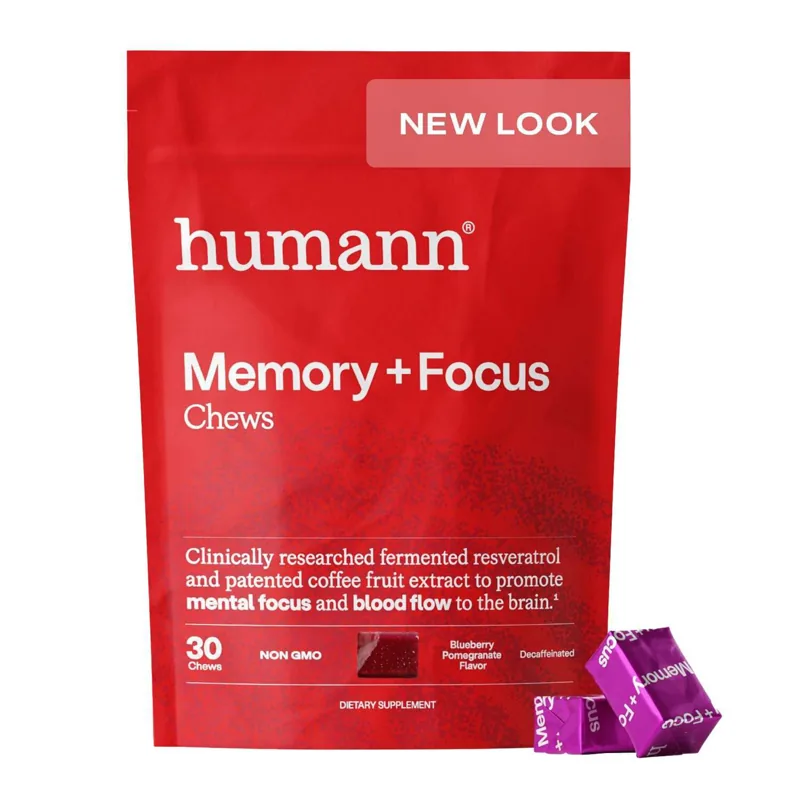
Physically: a matte red stand-up pouch, resealable across the top, holding thirty individually foil-wrapped chews about the size of a large caramel. The wrappers are silver-purple and marked "Memory + Focus" (the label the manufacturer used in an earlier version of the product; the current bag is the "Focus + Clarity" name). Flavor is blueberry-pomegranate, engineered for daily compliance rather than authenticity — closer to a fruit gummy than to actual fruit. Texture is soft, not sticky.
| What the panel lists | Amount per chew | Where the research points |
|---|---|---|
| Beet root powder Whole-root, non-fermented | 300 mg | Nitrate → nitric-oxide pathway. Almost all clinical evidence uses beet juice, at roughly 500 ml per dose. |
| Resveratrol Grape-derived, trans-resveratrol | 150 mg | Antioxidant polyphenol. Cognitive-adjacent trials use higher single or split doses. |
| Coffee fruit extract Whole cherry, decaffeinated | 100 mg | Referenced study measured a blood biomarker (BDNF), not focus or attention scores. |
| Sugar The reason it's a chew | 2 g | Trivial for most adults. Not zero for a strict glycemic protocol. |
Sold direct through GNC.com at $39.99 for a bag of thirty. Subscribe & Save lists at $37.99 (about a 5% discount) and ships every thirty days by default. Free shipping over $49. Loyalty-member pricing at GNC sometimes stacks on top of that for a signed-in checkout; the price on the day this review went to press was $39.99 one-time or $34.00 with a first-order promo through the loyalty program.
Ingredient one · Coffee fruitOne Hundred Milligrams, the Exact Dose of a Study, and What That Study Measured
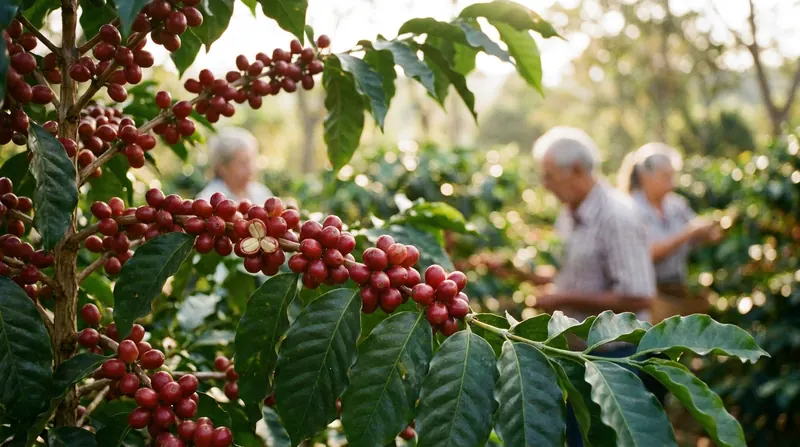
The 100 mg figure on the panel is not arbitrary. It matches, to the milligram, the dose used in a widely cited 2013 trial of a whole-coffee-cherry extract branded in the ingredient trade as NeuroFactor. Twenty-five healthy adults were given a single 100 mg capsule, and serum levels of brain-derived neurotrophic factor — BDNF, a protein tied to neuronal maintenance and plasticity — were measured in the blood at several intervals across the following hours. BDNF rose by an average of about 143% versus placebo.[1]
What the trial measured: a protein in the blood, after a single dose, in healthy adults. What it did not measure: focus, attention, reaction time, working-memory span, or any performance-based cognitive outcome.
Reyes-Izquierdo, T. et al. (2013). British Journal of Nutrition, single-dose crossover, n=25.The distinction is not a semantic quibble. A raised serum BDNF is a plausible upstream signal, not a confirmed downstream outcome. When a product label pairs "100 mg" with the word "focus," the number is doing work the study behind it did not do. That does not make the ingredient useless. It means the responsible way to read the panel is: the dose matches a trial that measured a biomarker; the trial did not measure the thing on the front of the bag.
Ingredient two · ResveratrolOne Hundred and Fifty Milligrams, and the One Cognitive Trial in the File, at Two Hundred, in Overweight Adults

Resveratrol at 150 mg lands at the low end of the range used in published research. The trial in this ingredient's file that most closely resembles a "focus" claim is a 2014 cognitive study in postmenopausal women, which used 200 mg/day of a proprietary resveratrol preparation and, in a separate arm, measured cerebrovascular responsiveness and a memory-recall task after fourteen weeks.[2] A related 2017 cohort in overweight, otherwise healthy adults extended the observation period and reported measurable improvements on a delayed word-recall task at a similar dose across six months.[3]
The chew delivers 150 mg once daily. That is 75% of the dose in the cited trials, in a population that may not match the trial cohort, over a duration a first-time buyer is unlikely to sustain without a routine. None of that makes the 150 mg "wrong." It means the chew is not a portable copy of the study result. If a reader wants the outcome that specific trial documented, the trial protocol is the honest reference, not the panel.
Ingredient three · Beet rootThree Hundred Milligrams of Powder, and a Body of Research That Runs on Juice

Beet root is the ingredient in this bag with the largest and most persuasive research file. Almost all of that file — the improvements in exercise tolerance, the measured drops in blood pressure, the increases in cerebral blood flow that get quoted on product pages — is built on beet juice, at roughly 500 ml per serving, delivering somewhere between 5 and 8 mmol of dietary nitrate per day.[4] Nitrate is the substrate the body converts to nitric oxide via the enterosalivary pathway. Nitric oxide is what pages mean when they write "blood flow."
300 mg of powder is not, by construction, a substitute for that juice. Powder concentration depends on the processing method — freeze-dried whole-root versus concentrate versus fermented — and manufacturers rarely print the actual nitrate content per serving on retail labels. It is entirely plausible that a well-processed 300 mg dose delivers a meaningful trickle of nitrate. It is also entirely plausible that the trickle is well below the concentrations the beet-juice literature relies on.
The one-sentence version
If the outcome you want is the outcome the beet-juice trials measured, drink beet juice at the study dose. If the outcome you want is a low-friction daily habit around a small amount of beet-derived nitrate, that is what a 300 mg powder in a chew delivers.
The sugar · Two grams a chewWhy It's a Chew, and When Two Grams Stops Being Trivial

The chew format is not decorative. Pectin, sugar, and a fruit-forward flavor system are what let a manufacturer skip the capsule, skip the water, and land the daily dose as a snack. That decision has a downstream number: two grams of sugar per chew. Sixty grams across a bag if a reader finishes it in a month at the recommended one-a-day cadence.
For most adults tracking added sugar loosely, two grams is inside the noise. For diabetics on a strict glycemic protocol, for anyone on a ketogenic regimen, or for a reader already at their added-sugar limit from other sources, two grams is not zero and deserves to be counted. The label is honest about the number; the decision is one a reader has to make for themselves.
Six things it will not doThe Limits Worth Naming, Before the Purchase
- It will not deliver the beet-juice nitrate dose the popular research is built on. The 300 mg powder is not the 500 ml juice.
- It will not reproduce the resveratrol cognitive-trial outcome. The dose in the chew is below the dose the trial used, and the population and duration are different.
- It will not, in a single serving, produce the focus improvement the marketing implies from the coffee-fruit study — that study measured a blood biomarker, not focus.
- It will not outperform the fundamentals. Sleep quality, caffeine timing, hydration, movement, and screen habits will move a morning far more than any 100 mg ingredient in a chew.
- It will not taste like actual fruit. Blueberry-pomegranate here is a compliance flavor, not a food.
- It will not cancel a Subscribe & Save shipment for you. Cancellation is manual, on the GNC account page, and needs to happen before the next auto-ship date — which is thirty days from your first order, not thirty days from the moment you decide the chew is not for you.
If you try it · The routineOne Bag, One Chew With the Coffee, Thirty Days, One Notebook

A supplement without a routine is a receipt. A routine without a supplement is still a routine and will do most of the work. The point of the thirty days is not to prove the chew works — it is to give you an honest reading of your morning that you can compare across a full billing cycle.
- One chew, with your first cup of coffee, at the same time every day. Attach it to something that already happens. Do not add it to a new time slot.
- Keep a two-column notebook. At 8 a.m. and 3 p.m., write a focus score from 1 to 5 and two words on what pulled or held your attention. Two lines a day. Thirty days.
- Change nothing else during the trial. Not your sleep schedule, not your caffeine intake, not your screen habits. Any parallel change becomes a confound.
- On day thirty, re-read the notebook. If the average score is up by more than one point, the chew — or something that changed with it — has earned another bag. If it's flat or lower, the chew has not, and the return window is the mechanism the retailer built for exactly this outcome.
Who it suits · Who it does notTwo Short Lists, No Hedging
It suits
- Adults who already have a morning coffee ritual and want to add one small thing to it without a new time slot.
- Anyone curious about beet root, resveratrol, or coffee fruit but unwilling to commit to a full-dose juice or capsule regimen at once.
- Readers who need a snack format to build a supplement habit. Capsules are the number-one thing people quietly stop taking.
- Households where a sixty-day return window on opened product is what makes a first purchase feel reasonable.
It does not suit
- Diabetics or anyone on a strict glycemic protocol — the two grams of sugar per chew is small, but not zero.
- Readers who want the beet-juice outcome. That is beet juice, at the study dose.
- Anyone expecting a measurable focus lift from the coffee-fruit line specifically — the referenced trial measured a blood marker.
- Buyers who forget to cancel subscriptions. Set a reminder before you check out.
Where it is sold · The return mathMade for a Texas Company, Sold Through GNC, With a Return Window on Opened Product

The bag is formulated and marketed by HumanN, an Austin, Texas company known primarily for its powdered beet products. Retail distribution is centered on GNC.com, at $39.99 for a bag of thirty, with Subscribe & Save at $37.99 and periodic loyalty-member promotions. Free shipping applies over $49; a bag of thirty on its own comes in below that threshold, so most single-bag orders will ship for a small flat fee.
The part of GNC's return policy that carries the cost of trying a new supplement is worth reading in the retailer's own words before you place the order: the sixty-day window applies to product returned in "any condition" — that is, opened or partially used product is eligible for a refund, subject to a proof-of-purchase requirement. That is unusually generous for a supplement retailer, and it is the mechanism the routine above relies on. Read the current policy on the page linked in the sidebar; retailers do change these terms.
Not medical advice
Nothing in this review is medical guidance. Supplements are not intended to diagnose, treat, cure, or prevent any disease. If you take any prescription medication, are pregnant or nursing, or are managing a diagnosed condition, talk to a licensed clinician before starting this or any supplement.
Reader responsesNotes From Readers of an Earlier Version of This Review
Comments below were received by email after an earlier draft of this review circulated in September. Each is quoted with the writer's permission; last names and cities have been shortened at the writer's request. We have not been able to verify individual outcomes.

"I did the notebook, which I would not have done on my own. The 3pm score went up by about a point over three weeks. I am keeping it, but the honest change was probably that I had a reason to notice my afternoon at all."

"I liked that the review told me what the chew would not do. I bought a bag anyway, because forty dollars for the format felt fair, and my coffee is not a place I want to skip. Cancelled the subscription after the first bag and reorder manually now."

"Flat scores at day thirty and I returned the bag. GNC honored the return on the opened portion, which was the part of this review I most wanted to verify. Took eleven days to see the refund on my card."

"Bought it for my mother, not for me. She likes the flavor and the small step of the morning that the chew adds. That, for our family, is worth more than the ingredient math."

"The two-gram sugar note is why I nearly did not buy it. I am pre-diabetic and my dietitian and I looked at it together. She was fine with one a day, not two. I would want more reviews to name that number up front."
Questions readers ask firstThe Six We Answer Most Often
Can I take two chews for a bigger effect?
The label says one. Doubling doubles the sugar and still does not get you to the beet-juice or resveratrol study doses. If the goal is a study dose, the study product is the honest reference — the chew is the format, not the dose.
Is it really caffeine-free?
Yes. Coffee-fruit extract is made from the cherry pulp around the bean, not the bean itself, so residual caffeine is negligible. The bag is safe to eat in the evening on that basis, though whether an evening chew helps you sleep is not what any of the three cited studies measured.
How long until I can tell if it is working?
Give it thirty days with the notebook described above. Any product that promises a next-day judgment is either overstating or underestimating you.
Will GNC actually refund an opened bag?
GNC's stated policy at the time this review published is a sixty-day window that accepts opened product with proof of purchase. Reader letters above corroborate this in at least one case. Confirm the current policy on the retailer's page before you buy; retailers change these terms.
Is it safe with a prescription?
Beet-derived nitrates can lower blood pressure. Resveratrol can interact with anticoagulants and with drugs metabolized by CYP3A4. If you take any prescription medication, this is a conversation with your clinician, not a comment thread.
Should I buy on the Subscribe & Save price?
Only if you have already used one bag and want to keep going. First-time buyers should place a one-time order, use the routine, and enroll in the subscription at the start of the second bag if it earned a second bag.
The recap · Sixty secondsEverything Above, Compressed

- Thirty blueberry-pomegranate chews, $39.99 at GNC. Subscribe & Save $37.99.
- Three actives on the panel: 300 mg beet root powder, 150 mg resveratrol, 100 mg coffee-fruit extract.
- The 100 mg coffee-fruit study measured a blood marker (BDNF), not focus.
- The 150 mg resveratrol dose is 75% of the dose in the one cognitive-adjacent trial.
- 300 mg beet root powder is not a substitute for beet juice at the study dose.
- Two grams of sugar per chew. Sixty grams if you finish the bag in a month.
- Sixty-day GNC return window applies even to opened product, subject to proof of purchase.
- Worth trying if the snack format is what will get you to keep a supplement habit. Not the shortest path to the outcomes the ingredient labels reference.
SuperBeets Focus + Clarity — 30-Count Bag
Sold by GNC. Purchased at retail for this review. Sixty-day return window on opened product, subject to proof of purchase.
Affiliate link · Price verified 9/30/2026 · Retailer terms may change
References, disclosures & methodology
- Reyes-Izquierdo T, Nemzer B, Shu C, Huynh L, Argumedo R, Keller R, Pietrzkowski Z. Modulatory effect of coffee fruit extract on plasma levels of brain-derived neurotrophic factor in healthy subjects. British Journal of Nutrition (2013). doi:10.1017/S0007114512005338
- Evans HM, Howe PRC, Wong RHX. Effects of resveratrol on cognitive performance, mood and cerebrovascular function in postmenopausal women; a 14-week randomised placebo-controlled intervention trial. Nutrients (2017). doi:10.3390/nu9010027
- Marx W, Kelly JT, Marshall S, Cutajar J, Annois B, Pipingas A, Tierney A, Itsiopoulos C. Effect of resveratrol supplementation on cognitive performance and mood in adults: a systematic literature review and meta-analysis of randomized controlled trials. Nutrition Reviews (2018). doi:10.1093/nutrit/nuy010
- Lansley KE, Winyard PG, Bailey SJ, et al. Acute dietary nitrate supplementation improves cycling time trial performance. Medicine & Science in Sports & Exercise (2011). doi:10.1249/MSS.0b013e3181f2bfa6
- Product page, GNC.com — SuperBeets Focus + Clarity Chews. Current retail price and return policy. Accessed September 30, 2026.
- HumanN, Inc., Austin, TX — manufacturer product page and formulation details, September 2026.
Sponsorship disclosure. This article is sponsored content paid for by HumanN, and appears as a paid recommendation on native-advertising platforms. Editorial control — headline, structure, conclusions, the sections about what the product does not do, and the routine we recommend — was retained by The Everyday Details. Product was purchased at retail from GNC and was not supplied by the sponsor. Links to the retailer are affiliate links; commissions do not change what we publish.